turndetect.co

Free & Unlimited Words & No Signup

The rapid advancement of artificial intelligence has fundamentally transformed how content is created, consumed, and evaluated. AI writing assistants like ChatGPT, Claude, and Gemini have become indispensable tools for content creators, students, marketers, and professionals worldwide. These powerful language models can generate articles, essays, reports, and marketing copy in seconds—tasks that would traditionally take hours or even days to complete manually.
However, as AI-generated content becomes increasingly prevalent, a new challenge has emerged: detection. Educational institutions, publishing platforms, and search engines have developed sophisticated AI detection tools to identify machine-generated text. Tools like GPTZero, Turnitin, and Originality.ai can now flag AI-written content with remarkable accuracy, creating significant concerns for users who rely on AI assistants for their writing needs.
This is where AI humanizer tools step in to revolutionize the game. These innovative solutions are designed to transform robotic, AI-generated text into natural, human-sounding content that bypasses detection algorithms while preserving the original meaning and intent. Whether you’re a student submitting an academic paper, a marketer crafting SEO content, or a professional preparing business documents, understanding these tools has become essential in today’s AI-driven landscape.
In this comprehensive guide, we’ll dive deep into the top 6 AI humanizer tools available today, providing you with detailed insights, feature comparisons, and actionable recommendations. Our analysis is based on extensive research and includes the latest tools and technologies in this rapidly evolving space.

Understanding AI Humanization: Why It Matters

Before we explore the specific tools, let’s understand what AI humanization actually means and why it’s become so crucial in the current digital ecosystem.

The Detection Problem

AI writing tools, despite their impressive capabilities, tend to exhibit certain patterns that detection algorithms have learned to identify:

  • Uniform sentence structure: AI often produces sentences of similar length and complexity
  • Predictable paragraph organization: Content tends to follow predictable templates
  • Lack of colloquial expressions: AI text rarely includes idioms, slang, or regional language variations
  • Overuse of certain transition words: Terms like “furthermore,” “moreover,” and “additionally” appear frequently
  • Absence of personal voice: Generic, impersonal writing without individual characteristics
    These patterns, while subtle to human readers, are easily spotted by sophisticated AI detectors that analyze text at the granular level.

The Humanization Solution

AI humanizer tools address these issues by:
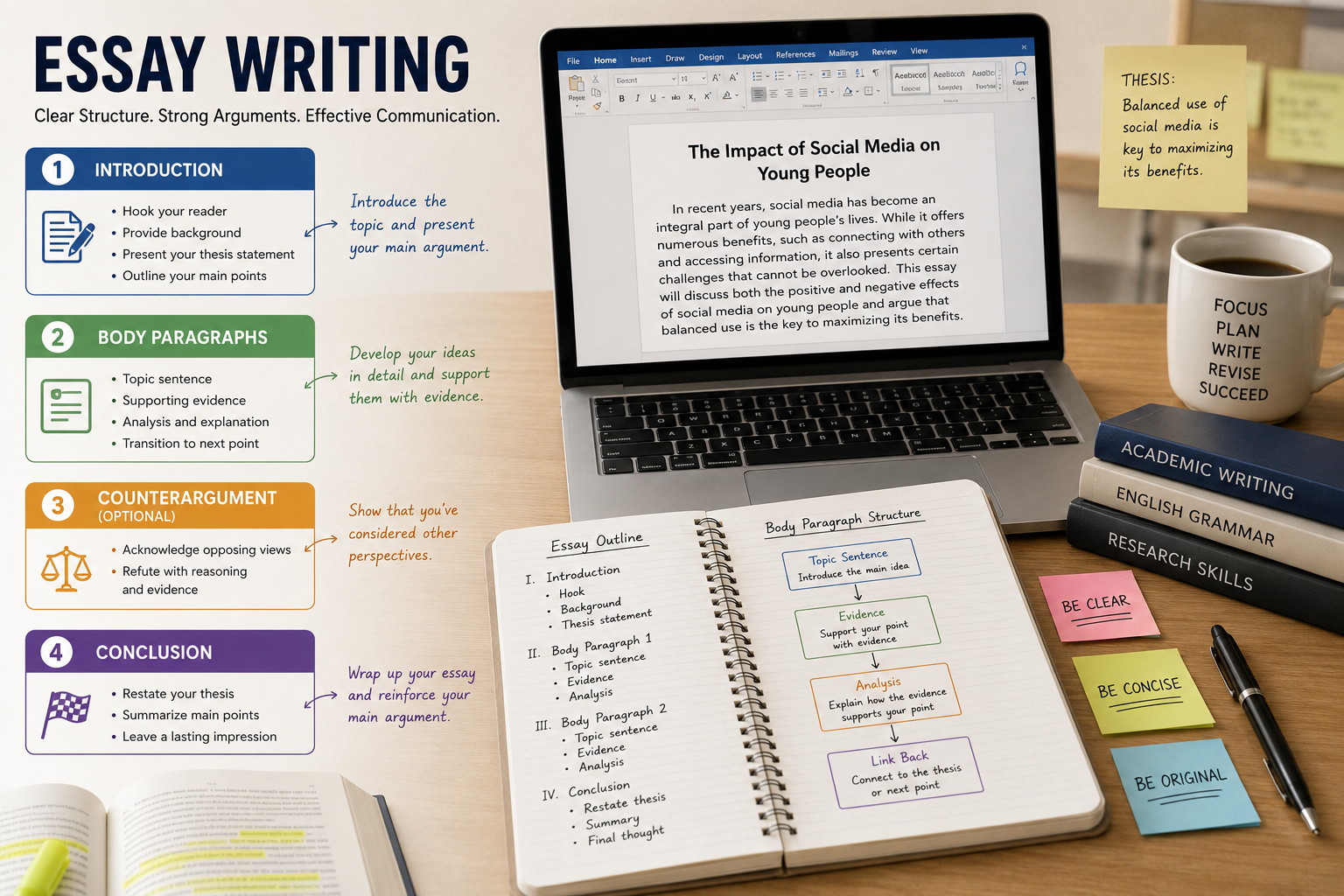
  1. Rewriting content to include varied sentence structures and lengths
  2. Adding natural language variations that mimic human writing patterns
  3. Incorporating colloquialisms and informal expressions where appropriate
  4. Adjusting tone and style to sound more personal and engaging
  5. Preserving original meaning while transforming the delivery
    The best humanizer tools accomplish all of this while maintaining the integrity and accuracy of the original content—a delicate balance that separates premium solutions from subpar alternatives.
    Technology and writing concept showing digital transformation

Top 6 AI Humanizer Tools: Detailed Comparison

Based on extensive research and analysis of the latest market offerings, here are the six best AI humanizer tools currently available. We’ve evaluated each based on detection bypass effectiveness, output quality, features, pricing, and user experience.

1. AceEssay AI Humanizer – Best for Academic Writing

Overview
AceEssay AI Humanizer (available at https://aceessay.ai/en/humanizer) is a specialized tool designed specifically for academic writing needs. It has gained significant traction among students, researchers, and academic professionals who need to humanize AI-assisted writing while maintaining scholarly integrity.
Key Features

  • Academic-Optimized Humanization: Specifically designed to maintain academic tone and structure
  • Citation Preservation: Ensures citations and references remain intact during transformation
  • Plagiarism Reduction: Significantly reduces similarity scores while maintaining original meaning
  • Multiple Academic Styles: Supports APA, MLA, Chicago, Harvard, and other citation formats
  • AI Detection Bypass: Effectively bypasses Turnitin, GPTZero, and other academic detection systems
  • Grammar and Style Enhancement: Improves overall writing quality alongside humanization
  • User-Friendly Interface: Easy-to-navigate design suitable for students of all levels
    Performance
    AceEssay Humanizer demonstrates strong performance in academic contexts, achieving bypass rates of approximately 80-85% against major academic AI detectors including Turnitin and GPTZero. The tool is particularly effective at maintaining the formal, structured tone required in academic writing while removing telltale AI patterns.
    Unique Strengths
    What sets AceEssay apart is its specialized focus on academic content. Unlike generic humanizers, AceEssay understands the nuances of scholarly writing:
  • Preserves technical terminology essential for academic credibility
  • Maintains appropriate citation structures
  • Keeps the analytical and objective tone expected in academic papers
  • Reduces the mechanical patterns that academic detectors specifically look for
    Pricing
  • Free trial with limited uses
  • Basic plan: $7.99/month (5,000 words)
  • Premium plan: $14.99/month (unlimited words)
  • Annual discounts available
    Best For
    Students, researchers, and academics who need to humanize essays, research papers, dissertations, and other scholarly content while maintaining academic integrity and passing AI detection checks.

2. HIX Bypass – Best User-Friendly Option

Overview
HIX Bypass is an AI humanizer tool integrated into the broader HIX.AI platform. It has gained significant popularity due to its intuitive interface and consistent performance across various content types.
Key Features

  • One-Click Humanization: Simple paste-and-transform workflow
  • Multiple Tone Options: Choose between casual, professional, academic, or creative tones
  • Plagiarism-Free Guarantee: Ensures unique output every time
  • Multi-Language Support: Supports humanization in 50+ languages
  • Batch Processing: Process multiple documents simultaneously
    Performance
    Independent testing shows HIX Bypass achieving an impressive bypass rate of approximately 83.52% across major AI detectors. The tool performs particularly well with academic content and formal business writing.
    Pricing
  • Free version available with 1,000 words/month
  • Essential plan: $9.99/month
  • Pro plan: $19.99/month (recommended for regular users)
    Best For
    Users who prioritize ease of use and need a straightforward solution without technical complexities.

3. StealthGPT – Best for Advanced Users

Overview
StealthGPT is designed for users who need more control over the humanization process. It offers advanced customization options and claims to produce the most natural-sounding output in the industry.
Key Features

  • AI-to-Human Conversion Technology: Proprietary system that mimics human writing patterns
  • Customization Options: Fine-tune vocabulary, sentence structure, and tone
  • API Access: Available for developers who want to integrate humanization into their workflows
  • Stealth Mode: Additional layer of protection for high-stakes content
  • Detailed Analytics: Reports on readability scores and human-like metrics
    Performance
    Testing indicates StealthGPT achieves bypass rates around 71-75%, with exceptional performance on conversational and creative content. The tool excels at making AI text sound genuinely human-written.
    Pricing
  • Free trial available
  • Starter plan: $14/month
  • Professional plan: $49/month
  • Enterprise pricing available
    Best For
    Power users, developers, and businesses requiring API integration and advanced customization capabilities.

4. Undetectable AI – Best Overall AI Humanizer

Overview
Undetectable AI has established itself as one of the most effective and reliable AI humanizer tools in the market. Developed with advanced natural language processing algorithms, this tool has consistently demonstrated high success rates in bypassing even the most sophisticated AI detection systems.
Key Features

  • Advanced Humanization Engine: Uses proprietary algorithms to restructure sentences and add human-like variations
  • Multiple Writing Modes: Offers various modes for different use cases (academic, professional, casual)
  • Built-in AI Detector: Includes an integrated detection checker to verify results
  • SEO-Friendly Output: Maintains keyword density and readability for content marketers
  • Fast Processing: Converts text in seconds without compromising quality
    Performance
    According to recent independent testing, Undetectable AI achieves bypass rates of approximately 85-90% against major detectors including GPTZero, Turnitin, and Originality.ai. The tool maintains meaning accuracy above 95%, ensuring that your content’s core message remains intact.
    Pricing
  • Free tier available (limited word count)
  • Premium plans start at $9.99/month for the Basic plan
  • Enterprise solutions available for larger organizations
    Best For
    Content creators, students, and professionals who need reliable, high-quality humanization without significant cost investment.

5. Humbot – Best Free Option

Overview
Humbot offers one of the best free AI humanization solutions available today. While it may not have all the advanced features of premium tools, it provides reliable humanization that works for most everyday needs.
Key Features

  • Completely Free: No hidden costs or word limits for basic use
  • Instant Results: Fast processing without waiting times
  • No Registration Required: Start using immediately without creating accounts
  • Browser-Based: No software installation needed
  • Privacy-Focused: Doesn’t store user content on servers
    Performance
    Despite being free, Humbot achieves respectable bypass rates of approximately 60-70% against standard AI detectors. It works best for informal content and social media posts.
    Pricing
  • 100% Free
  • Premium version: $5.99/month for enhanced features
    Best For
    Users on a tight budget who need basic humanization without financial commitment.

6. HumanizeAI.io – Best for Content Marketers

Overview
HumanizeAI.io is a comprehensive AI humanization platform that combines powerful transformation capabilities with SEO optimization features, making it particularly valuable for content marketers.
Key Features

  • SEO-Optimized Output: Maintains keyword density and readability for search engines
  • Bulk Processing: Handle large volumes of content efficiently
  • Brand Voice Training: Learn and replicate your brand’s unique writing style
  • Integration Capabilities: Works with popular content management systems
  • Quality Assurance: Built-in grammar and style checks
    Performance
    HumanizeAI.io achieves bypass rates of approximately 75-80% while maintaining excellent readability scores. The tool is particularly effective for marketing content, blog posts, and website copy.
    Pricing
  • Free version available
  • Starter plan: $12/month
  • Business plan: $39/month
  • Agency plan: $99/month
    Best For
    Content marketers, SEO professionals, and businesses that need to scale AI-assisted content production while maintaining quality and search visibility.
    Digital marketing and content creation workflow

Comprehensive Feature Comparison

To help you make an informed decision, here’s a detailed comparison of all six tools across key metrics:

Tool Bypass Rate Free Option Starting Price Best For Unique Feature
AceEssay 80-85% Trial $7.99/mo Academic writing Citation preservation
Undetectable AI 85-90% Yes $9.99/mo Overall reliability Built-in detector
HIX Bypass 83% Yes $9.99/mo Ease of use Multi-language
StealthGPT 71-75% Trial $14/mo Advanced users API access
Humbot 60-70% Yes Free Budget users No signup required
HumanizeAI.io 75-80% Yes $12/mo Content marketers SEO optimization

How to Choose the Right AI Humanizer Tool

With so many options available, selecting the right tool can feel overwhelming. Here are the key factors to consider:

1. Primary Use Case

  • Academic writing: AceEssay is specifically designed for this purpose
  • Marketing content: HumanizeAI.io offers SEO optimization features
  • General use: Undetectable AI or HIX Bypass provide balanced performance
  • Budget constraints: Humbot offers the best free option

2. Required Bypass Rate

Consider the sensitivity of your content:

  • High-stakes content (academic submissions, legal documents): Use Undetectable AI or AceEssay
  • Moderate-stakes content (blog posts, marketing copy): HIX Bypass or HumanizeAI.io
  • Low-stakes content (social media, informal writing): Humbot is sufficient

3. Volume Requirements

  • Occasional use: Free tiers or trials may be adequate
  • Regular use: Consider monthly subscription plans
  • Enterprise scale: Look for bulk pricing and API access

4. Integration Needs

  • Standalone use: Most tools work well independently
  • Workflow integration: StealthGPT offers robust API access
  • CMS integration: HumanizeAI.io provides direct integrations

Best Practices for Effective AI Humanization

To maximize the effectiveness of any AI humanizer tool, follow these best practices:

1. Start with Quality AI Output

The better your initial AI-generated content, the better the humanized result will be. Use advanced AI models and provide clear, detailed prompts.

2. Review and Edit Output

No tool is perfect. Always review humanized content for:

  • Factual accuracy
  • Logical flow and coherence
  • Appropriate tone for your audience
  • Any unintended meaning changes

3. Layer Your Approach

For high-stakes content, consider:

  1. First humanization pass
  2. Manual editing and refinement
  3. Second humanization pass
  4. Final quality check

4. Stay Informed About Detection

AI detection technology evolves rapidly. Stay updated on the latest detection methods and test your content against current tools.

The Future of AI Humanization

The AI humanization industry is rapidly evolving. Here’s what we can expect in the coming years:

  1. More Sophisticated Detection: AI detectors will become increasingly accurate, requiring humanizers to evolve
  2. Contextual Understanding: Future tools will better understand context and maintain meaning
  3. Voice Personalization: Tools will learn individual writing styles for more authentic output
  4. Multi-Modal Humanization: Expanding beyond text to include images, audio, and video content

Ethical Considerations

While AI humanizer tools provide valuable utility, it’s important to use them responsibly:

  • Always disclose AI assistance when required by your institution or industry
  • Use humanization to enhance your work, not replace your own contribution
  • Maintain academic and professional integrity
  • Verify all factual claims in humanized content

Conclusion

AI humanizer tools have become essential assets in our AI-augmented writing landscape. Whether you’re a student navigating academic requirements, a content creator balancing efficiency with authenticity, or a professional seeking to optimize your workflow, these tools offer valuable solutions.
Among the six tools we’ve analyzed, Undetectable AI emerges as the best overall choice for most users, offering the highest bypass rates with reliable quality. However, your specific needs may point to a more specialized solution:

  • For academic writing: AceEssay AI Humanizer provides specialized features that preserve scholarly integrity
  • For ease of use: HIX Bypass offers the most intuitive experience
  • For advanced users: StealthGPT provides customization and API access
  • For budget-conscious users: Humbot delivers solid performance for free
  • For content marketers: HumanizeAI.io combines humanization with SEO optimization
    Remember that these tools should enhance your writing process, not replace your creative input entirely. The most effective approach combines AI assistance with human oversight, ensuring that your final content is both efficient to produce and authentic in its delivery.
    As the cat-and-mouse game between AI generators and detectors continues, staying informed about the latest tools and best practices will be crucial for anyone working with AI-assisted writing. We hope this comprehensive guide has provided you with the insights needed to navigate this evolving landscape confidently.
    Disclaimer: The effectiveness of AI humanizer tools may vary based on specific use cases, content types, and the continuous updates to AI detection systems. Always verify that your use of such tools complies with applicable regulations, institutional policies, and ethical guidelines.

TRY THE BEST AI HUMANIZER

What Exactly Are AI Detectors (And Why Should You Care)?

Before we dive into the solutions, let’s quickly understand the problem. AI detectors like Turnitin, GPTZero, Originality.ai, and Winston AI analyze text patterns, sentence structure, and vocabulary to determine whether content was written by a human or generated by AI tools like ChatGPT, Claude, or Gemini.
These detectors have become incredibly sophisticated. According to recent searches, tools like Turnitin now offer AI detection features that can analyze entire documents, giving educators and publishers peace of mind about content authenticity.
The tricky part? Even perfectly good content can get flagged simply because it sounds too polished or structured — something AI writing often does.
That’s where AI humanizers come in.

How Do AI Humanizers Work?

Think of an AI humanizer as a text transformer. It takes your AI-generated content and rewrites it to:

  • Vary sentence length and structure
  • Introduce natural imperfections that human writing typically has
  • Add colloquialisms and conversational tones
  • Improve flow and readability
  • Bypass detection from tools like Turnitin, GPTZero, and others
    Many of these tools are now available free online, making them accessible to everyone from students to professional writers.

Top 10 AI Humanizer Tools to Bypass Detection in 2024

Let’s get to the good stuff. Here are the 10 best tools that can help your content sound human and pass AI detection:
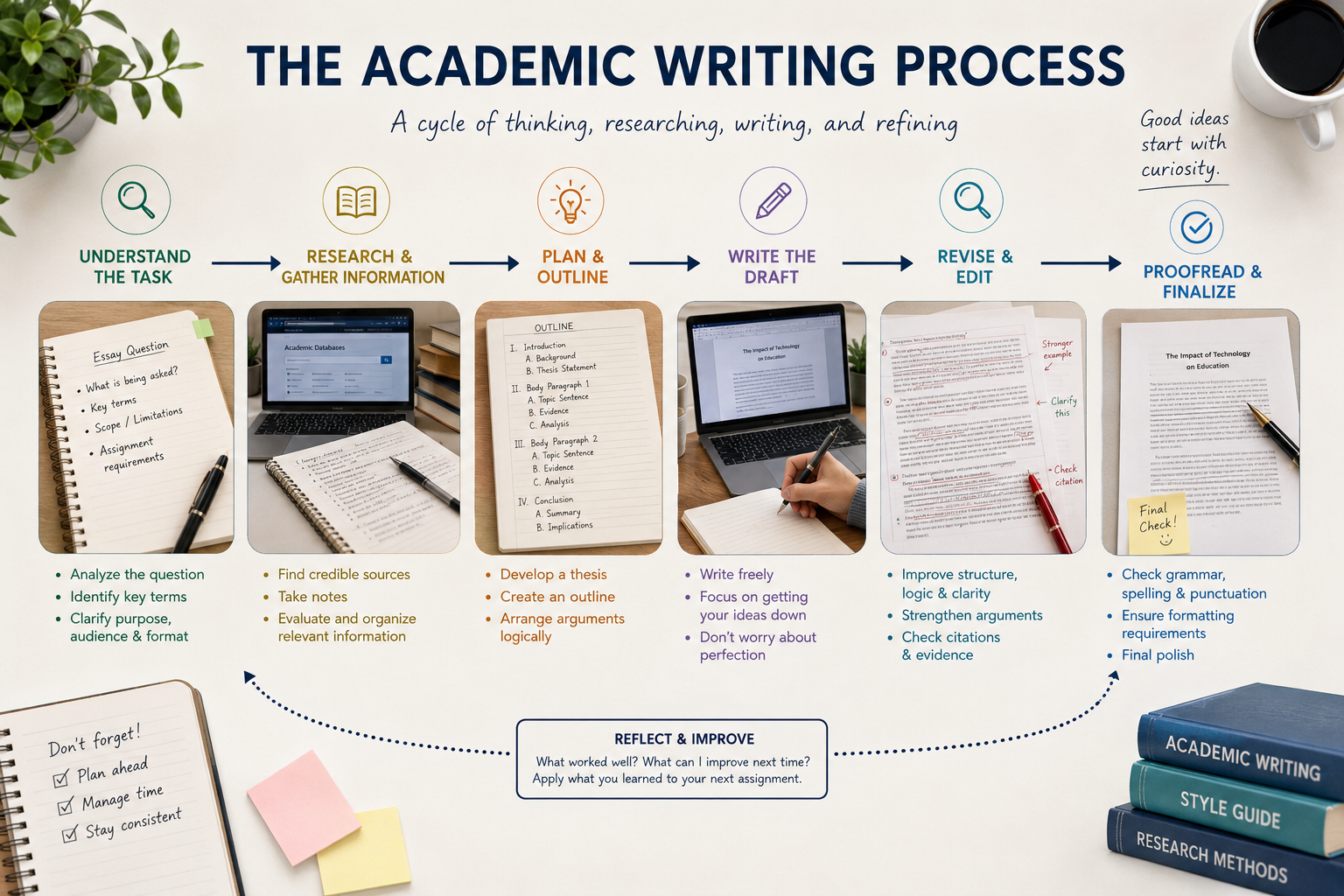
1. Undetectable AI

AI Writing Technology
This is one of the most popular names in the humanizer space. Undetectable AI specializes in converting AI-generated text into content that mimics human writing patterns. It’s particularly effective against Turnitin and other mainstream detectors. Users praise its ability to maintain the original meaning while completely changing the text’s “voice.”

2. HIX Bypass

HIX Bypass is another powerhouse when it comes to humanizing AI content. It’s designed specifically to help content bypass detection tools while preserving quality and readability. Many users report excellent results against Originality.ai and GPTZero.

3. Stealthly AI

As the name suggests, Stealthly AI is all about making your content invisible to detectors. It’s particularly popular among content marketers who need to produce large volumes of content that still feels authentic.

4. PassMe AI

This tool focuses on rewriting AI-generated text to sound more natural and conversational. PassMe AI is known for its efficiency in bypassing Turnitin and similar academic detection systems.

5. Rewritify

Rewritify offers a straightforward approach to humanizing content. It takes your AI text and rephrases it to include natural variations that AI detectors typically look for — things like varied sentence openings, different word choices, and organic flow.

6. AI Humanizer Pro

A dedicated humanizer tool that works with various types of content. AI Humanizer Pro is praised for its ability to maintain context while transforming the text’s tone and structure.

7. Humbot AI

Humbot specializes in making AI content undetectable. It’s particularly useful for content that needs to pass through multiple detection tools, including academic platforms like Turnitin.

8. uPass AI

This tool is designed specifically for bypassing AI detection in academic settings. uPass AI understands the specific patterns that Turnitin and similar tools look for, making it highly effective for student submissions.

9. Phrasly AI

Phrasly AI is designed to transform AI-generated content into text that mirrors human writing, aiming to bypass AI detection tools such as Turnitin and GPTZero. It’s gained popularity for its consistent results.

10. Humanizer.org

A free online tool that offers basic humanization features. While it may not be as sophisticated as some premium options, Humanizer.org is a great starting point for those on a budget.

Quick Comparison Table

Tool Best For Free Option Bypass Rate
Undetectable AI All-around use Limited High
HIX Bypass Content creators Yes Very High
Stealthly AI Marketing content Limited High
PassMe AI Academic work Limited High
Rewritify Quick rewrites Yes Moderate
AI Humanizer Pro Professional writers Limited High
Humbot AI Multi-detector bypass Limited Very High
uPass AI Student submissions Limited High
Phrasly AI Bulk content Limited High
Humanizer.org Budget users Yes Moderate

Pro Tips for Best Results

Even with the best AI humanizer tools, here are some tips to maximize your success:

  1. Don’t over-rely on any single tool — Try combining 2-3 different humanizers for better results
  2. Review and edit the output — Humanizers aren’t perfect; a quick human review helps
  3. Add your personal touch — Include personal anecdotes or specific examples
  4. Check with multiple detectors — Test your content with different tools before final submission

The Bottom Line

Technology Tools
AI detection tools aren’t going away — in fact, they’re only getting more sophisticated. But neither are the humanizers designed to work alongside them. Whether you’re trying to get your blog post past Originality.ai or your essay past Turnitin, there’s a tool out there that can help.
The key is to use these tools responsibly. They’re meant to help you refine and improve your content, not to deceive. Think of them as a way to polish your ideas into their best possible form.
Have you tried any of these tools? Which one worked best for you? Drop a comment below and let’s discuss!
Remember: Always check the terms of service and academic integrity policies of your institution or platform before using any AI humanizer tool.

Turnitin, the industry-leading academic integrity platform, has been continuously evolving its AI detection capabilities throughout 2026. In July 2026, the company rolled out significant updates to its AI writing detection model, focusing on enhanced accuracy, multi-language support, and improved detection of sophisticated AI-generated content. Let’s dive into the 10 most important changes that educators, students, and academic institutions need to know about.

Understanding Turnitin’s AI Detection Evolution

Before we explore the July 2026 updates, it’s essential to understand how far Turnitin’s AI detection technology has come. The platform initially launched its dedicated AI Writing Detection feature in April 2023 and has continuously updated it since. By 2026, Turnitin can detect text generated by ChatGPT, GPT-4, Claude, Gemini, and other large language models with remarkable precision.
Turnitin’s AI writing detection tool is built around a unique transformer deep-learning architecture that enables institutions to identify when AI tools may have been used in submissions. As AI blurs the lines between human and machine-generated content, maintaining integrity in academic writing is more critical than ever.

The 10 Key Updates from July 2026

1. Enhanced Detection of GPT-5 and Newer LLMs

One of the most significant updates in July 2026 is the improved detection capabilities for the newest large language models. Turnitin has released an update that significantly improves detection of AI-generated content from newer LLMs, including:

  • GPT-5, GPT-5-mini, GPT-5-nano, and GPT-5.1
  • Gemini-2.5-pro and Gemini 2.5 Flash
  • Tools based on these advanced models
    This update demonstrates Turnitin’s commitment to staying ahead of rapidly evolving AI technology. As new models become available, the platform ensures that its detection algorithms remain effective.

2. Advanced Spanish Language AI Detection

Building on the Spanish language AI detection capabilities launched in September 2024, Turnitin has further enhanced its Spanish-language AI writing model. The July 2026 update minimizes false positives while maintaining high detection accuracy for Spanish submissions.
Turnitin is excited to continue improving its AI writing detection capabilities in Spanish to help educators uphold academic integrity for Spanish language submissions. This enhancement is particularly important given the significant number of Spanish-speaking academic institutions worldwide.

3. Japanese Language AI Detection Expansion

The July 2026 update includes expanded support for Japanese language AI detection. Turnitin is excited to release its AI writing detection capabilities in Japanese to help educators uphold academic integrity for Japanese language submissions.
This expansion brings the total number of supported languages to three (English, Spanish, and Japanese), with more languages expected in future updates.

Academic Technology and Writing Tools

4. Multi-Language Student Upload Feature

Turnitin has expanded its student upload functionality to support a wide range of languages. As of May 2026 (and further refined in July), student upload is available for the following languages:

  • Dutch
  • French
  • German
  • Spanish
  • Brazilian Portuguese
  • Turkish
  • Japanese
  • Korean
  • Vietnamese
  • Traditional Chinese
  • Simplified Chinese
  • Swedish
  • Italian
  • Russian
  • Romanian
  • Czech
  • Finnish
  • Polish
    This comprehensive language support ensures that students worldwide can submit their work seamlessly while maintaining academic integrity standards.

5. AI Writing Score Column in Turnitin Feedback Studio

A new AI writing score column is now available within the inbox of the classic Standard Assignment in Turnitin Feedback Studio, and within the My Files section of Turnitin Similarity. This feature provides educators with a clear, at-a-glance view of potential AI usage in student submissions, streamlining the review process.

6. Detection of AI “Humanizer” Tools

The 2026 model specifically targets content modified by AI “humanizer” tools designed to evade detection. This represents a significant escalation in the detection arms race—tools that previously worked to mask AI-generated text are now being caught with increasing accuracy.
This enhancement addresses a growing concern in academic circles: students using tools specifically designed to bypass AI detection.
Technology Analysis and Detection

7. Improved Detection Accuracy Statistics

Turnitin continues to report impressive accuracy metrics. According to their latest data, the platform reports a 98%+ accuracy rate on documents where more than 20% of the content is AI-generated, with a published false-positive rate of under 1% at that threshold.
However, independent studies show that real-world detection can drop to 60-85% on heavily edited text, with false positives disproportionately affecting non-native English speakers.

8. Cross-Lingual Paraphrase Detection

Looking toward the future, Turnitin’s 2026 roadmap includes better identification of translation-based obfuscation. This involves detecting when someone writes in one language and translates to another to evade detection through semantic alignment models.
While this feature may see full implementation later in 2026, the groundwork laid in July’s updates moves the platform closer to this goal.

9. Enhanced Authorship Features

The AI detection feature is automatically available within the Authorship feature to all customers who license Turnitin Feedback Studio with Originality, Originality Check with Originality, or Similarity with Originality and have AI writing detection enabled on their accounts.
This seamless integration ensures that institutions don’t need to purchase additional tools or undergo complex setup processes.

10. New Guidance Resources for Educators and Students

Turnitin has released new and updated guidance to help instructors and students learn more about these new features. These resources include:

  • Best practices for interpreting AI detection reports
  • Information about how the detection algorithms work
  • Guidance for students on maintaining academic integrity
  • Technical documentation for institutional administrators

What These Changes Mean for Different Stakeholders

For Educators

The July 2026 updates provide educators with more powerful tools to maintain academic integrity. The new AI writing score column makes it easier to quickly identify potential issues, while the enhanced detection of newer LLMs ensures that even sophisticated AI-assisted work can be detected.
However, educators should remain aware of the potential for false positives, especially with non-native English speakers’ work, and use the AI detection reports as one factor in their evaluation process rather than the sole determinant.

For Students

Students should understand that Turnitin’s improved detection capabilities mean that AI-assisted writing is increasingly likely to be flagged. The best approach remains focusing on developing original writing skills and using AI tools ethically, if at all.

For Academic Institutions

Institutions should review their academic integrity policies to ensure they account for the evolving landscape of AI detection. The expanded language support means that international campuses can implement consistent AI detection standards across multiple language contexts.

The Future of AI Detection at Turnitin

Turnitin’s July 2026 updates represent just one milestone in an ongoing journey. The company regularly undertakes internal research to ensure their AI writing detector stays accurate and up-to-date. As external testing continues to reveal new insights about AI writing detection capabilities, Turnitin remains positioned among the foremost solutions in identifying AI-generated content within academia.
Looking ahead, we can expect continued improvements in:

  • Detection of increasingly sophisticated AI models
  • Better handling of multilingual and translated content
  • Reduced false positive rates, especially for non-native English speakers
  • More transparent reporting and governance tools

Conclusion

The July 2026 Turnitin AI Detector updates mark a significant step forward in the ongoing effort to maintain academic integrity in the age of generative AI. From enhanced detection of the latest language models to expanded multi-language support, these changes reflect Turnitin’s commitment to staying ahead of rapidly evolving AI technology.
For educators, students, and institutions, understanding these updates is crucial for navigating the complex landscape of academic integrity. As AI detection technology continues to advance, so too must our approaches to teaching, learning, and assessment.
Stay informed, stay ethical, and remember: the goal of AI detection isn’t to catch students, but to foster genuine learning and original thought in academic environments.


Few companies sit at the crossroads of education and technology quite like Turnitin. For more than two decades, the company has operated one of the world’s largest repositories of academic writing—billions of student papers, institutional submissions, web pages, and scholarly articles—supporting originality checks for schools and universities around the globe.
As artificial intelligence has reshaped how we write and verify writing, Turnitin has expanded beyond similarity detection into authorship analysis, AI writing detection, and pedagogical feedback. But how, exactly, does AI fit into a system powered by so much text? And what does it mean—for students, educators, and institutions—when AI tools are trained or evaluated in the context of this massive corpus?
AI technology in education representing the intersection of technology and learning

Understanding What “Turnitin’s AI” Actually Refers To

“AI” covers a range of capabilities. In academic integrity systems, it’s helpful to separate two layers: the reference corpus that powers similarity checks and the machine learning models that make predictions about text characteristics (such as the likelihood of AI authorship or stylistic consistency).

Similarity Matching vs. AI Writing Detection

Historically, Turnitin’s core technology has been originality checking: the system compares a new submission to a vast index of prior student papers, institutional repositories, web content, and publisher databases to find overlapping sequences of text. This process relies heavily on scalable indexing, document fingerprinting, and string matching—not necessarily on deep neural networks. Its purpose is to surface matches and percentages, not to “decide” whether something is plagiarized (that determination remains with the instructor).
More recently, vendors in this space, including Turnitin, have introduced AI writing detection and authorship analysis. Since its launch in April 2023, Turnitin’s AI writing detection tool has reviewed over 200 million papers, with data showing that more than half of students continue to use AI to write their papers.
These models try to estimate the likelihood that a passage was generated by a large language model or detect sudden deviations in a student’s writing style across assignments. Unlike simple matching, these capabilities typically are machine learning-based and require training on labeled examples of human and AI-generated writing.

The Role of the Corpus vs. Model Training

It’s important to distinguish between two uses of data:
Reference indexing: Billions of documents are stored and indexed so that future submissions can be compared against them. This is the backbone of similarity checking.
Model training and evaluation: Separate datasets (which may include public corpora, licensed content, synthetically generated texts, and, where permitted, de-identified or consented samples) are used to teach AI models to recognize patterns—for example, the distribution of sentence lengths or burstiness typical of human writing versus AI output.
While the existence of a massive corpus enables robust matching and can inform evaluation, organizations in this domain generally state that any use of student submissions for training advanced models is bounded by policy, contracts, and privacy laws. In practice, this means model training datasets are curated carefully and may not simply mirror the entire similarity index.

Where the Data Comes From

Over decades, Turnitin and comparable platforms have assembled a multi-source corpus. Although exact proportions are proprietary, the main categories are well-understood across the industry.

Student Submissions and Institutional Repositories

When instructors enable a “standard repository,” student papers are typically stored to check future submissions for similarity. Institutions may also maintain an institutional repository so internal matches surface (for example, between sections of the same course). These repositories provide the scale that makes high-quality matching possible across cohorts, semesters, and campuses.
Policies usually allow instructors or institutions to choose whether a given assignment is stored in a repository or excluded (“no repository”), and institutions may have agreements governing retention. The purpose of this storage is to enable similarity comparison; it is not to publish the work or make it publicly available.

Web Crawling and Publisher Partnerships

Similarity systems also check against publicly available web content and licensed scholarly sources. Partnerships with publishers and aggregators broaden coverage, which improves detection of overlap with articles, textbooks, and other academic content. This multi-source approach helps the system catch both obvious and subtle reuse.

Derived Metadata and Features

From each document, the system can compute derived signals for indexing and analysis, such as:

  • Document fingerprints and n-gram hashes for fast overlap detection
  • Stylometric features (e.g., sentence length distributions, punctuation patterns)
  • Linguistic features (e.g., parts of speech, readability indices)
  • Embeddings (vector representations) that capture semantic similarity
    These features help both traditional matching and machine learning models. The key is that the platform does not need to expose raw student text to end users for these features to be useful; internal indexes and derived representations can drive the system while preserving access controls.

From Similarity Checking to AI Writing Detection

Training an AI writing detector requires examples of both AI-generated and human-written text. For instance, a model might learn that many AI systems produce relatively uniform sentence structures or certain statistical signatures, while human writing often varies more in burstiness and transitions.
The training process typically includes:

  1. Curating datasets: Collecting known human writing (from public corpora, open-licensed datasets, and consented sources) and AI writing generated by various models across prompts, topics, and styles.
  2. Balancing and labeling: Ensuring the dataset covers a range of academic levels, genres, and disciplines. Labels should reflect the source (human, AI, mixed) with high confidence.
  3. Feature extraction: Computing stylometric, lexical, and semantic features. Recent methods also train transformers directly on raw text to learn these distinctions.
  4. Evaluation and calibration: Validating on withheld sets and real-world samples, then calibrating thresholds to prioritize low false positives.
    Crucially, modern detectors face a moving target. As generative AI improves, detectors must be retrained and stress-tested against new models and paraphrasers. That means ongoing data collection, versioning, and post-deployment monitoring are just as important as the initial training.
    Digital archives and document storage representing large-scale text repositories

What Does “Training on Billions of Student Papers” Mean in Practice?

The phrase can be misleading. There are three distinct ways the large corpus matters:
As a reference index: Billions of papers are essential to high-quality similarity matches. The “AI” here is in the infrastructure for searching, ranking, and presenting match evidence.
As a source of signals: Aggregated and de-identified statistics (for example, typical variance in sentence length in first-year lab reports) can inform feature engineering and baseline expectations without exposing identifiable content.
As an evaluation field: Even when models are trained on curated datasets, they are often evaluated in controlled, privacy-preserving ways against real academic writing to understand performance on authentic submissions.
By contrast, the idea that a company simply pours all stored student papers into a training hopper is neither technically necessary nor aligned with the privacy and contractual constraints under which educational data is handled.

Inside the Training Loop (At a High Level)

Although implementation details vary, a representative training loop for AI writing detection or authorship analysis includes the following stages:

1) Data Collection and Curation

Teams gather a mix of human-written texts (from open educational resources, public-domain corpora, instructor-contributed samples with consent, and purpose-built datasets) and AI-generated texts (from multiple language models, temperatures, and prompts). Care is taken to include diverse writing levels, disciplines, and non-native English writing to avoid bias.

2) Annotation and Quality Control

Each sample is labeled as human, AI, or mixed. Quality reviewers perform spot checks, and automatic filters remove near-duplicates and data leakage. Inter-annotator agreement is measured to ensure consistency.

3) Feature Engineering and Representation

Modern systems blend:

  • Stylometric features: Average sentence/word lengths, function-word ratios, punctuation patterns, perplexity estimates, burstiness scores
  • Lexical and semantic features: TF-IDF vectors, topic distributions, sentence embeddings
  • Neural encoders: Transformer-based encoders that learn representations directly from text
    Feature sets are versioned and auditable to support reproducibility and post-hoc analysis.

4) Model Training and Calibration

Common approaches include gradient-boosted trees over engineered features or transformer classifiers fine-tuned to distinguish AI vs. human text. Because the cost of false positives is high in educational contexts, calibration focuses on conservative thresholds. Some vendors expose per-sentence likelihoods or confidence estimates to support human review.

5) Robustness and Adversarial Testing

Detectors are stress-tested against paraphrasers, synonyms, sentence shuffling, obfuscation, and mixed authorship scenarios. Models are retrained if failure patterns (e.g., high false positives for non-native writers) emerge. Continuous evaluation pipelines monitor drift as AI generators evolve.

6) Privacy, Compliance, and Auditability

Training and evaluation environments are segmented, data is minimized and de-identified where possible, and retention policies align with institutional agreements. Access to raw submissions is tightly controlled and logged. Model artifacts and evaluations are documented for audit and for institutional review.

Educational data is among the most sensitive categories of information a technology company can handle. Effective AI in academic integrity must be paired with strong governance.

Who Owns Student Work?

Generally, students retain copyright to their work, while granting limited licenses to the institution and/or the service provider to store and compare the submission for academic integrity purposes. Those licenses are constrained by terms of use and institutional agreements. They do not authorize public display or commercial publication of the work.
Inputting student work into AI detection platforms without the student’s written consent can violate the Family Educational Rights and Privacy Act (FERPA).

Repository Choices and Opt-Outs

In most deployments, instructors can set whether an assignment stores submissions in the standard repository, an institutional repository, or no repository at all. This choice can be made at the assignment level to accommodate sensitive work (e.g., reflections or drafts). Institutions may also request removal of specific submissions under defined circumstances.

Compliance: FERPA, GDPR, and Beyond

Service providers must comply with relevant privacy laws. In the U.S., FERPA restricts disclosure of education records and requires that vendors operate under school official exceptions with legitimate educational interests. In the EU and UK, GDPR and UK-GDPR impose data minimization, purpose limitation, and data subject rights. These regimes shape how data can be used for training, evaluation, and product improvement.

Security and Access Controls

Expect layered defenses: encryption at rest and in transit, granular access control, audit logs, and regular security assessments. For AI workflows, additional controls include segregated training environments, limited retention of training extracts, and privacy review gates before model deployment.

Accuracy, Fairness, and the Limits of Detection

Even with careful training, AI writing detection has inherent limitations. Statistical models make probabilistic judgments and can be fooled by paraphrasers or mixed authorship. Conversely, unusual but genuine writing (e.g., highly polished work from a strong writer or a non-native writing pattern) can trigger false positives without careful calibration.

Precision, Recall, and Thresholds

Detectors must balance two errors:

  • False positives: Flagging human text as AI-generated, which can unfairly implicate students
  • False negatives: Missing AI-assisted text, reducing the tool’s deterrent effect
    In educational contexts, vendors often set conservative thresholds to minimize false positives, even if that reduces recall. Institutions should interpret scores as one signal among many, not as a verdict.

Bias and Equity Considerations

Training datasets that underrepresent certain groups or writing contexts may bias detectors. Responsible teams measure performance across subgroups (e.g., grade level, first-language background) and retrain when disparities are found. Transparent reporting and educator guidance help prevent over-reliance on any single score.

Common Misconceptions (And What’s Actually Happening)

Misconception Reality
“The AI reads all student papers to learn.” The reference index exists to compare new submissions with prior work. Model training for AI detection typically uses curated and permitted datasets. Large-scale access to raw student text is controlled and audited.
“Similarity percentage equals plagiarism.” Similarity highlights matching text; instructors must evaluate context, citations, and pedagogy. Many legitimate matches occur in common phrases, references, or assignment prompts.
“AI detection is definitive proof.” AI detection produces probabilistic indicators. Educators should consider drafts, process evidence, and student conversations to make fair determinations.
“Opting out removes academic integrity safeguards.” Repository choices affect storage for future matching but do not eliminate originality checks against web and licensed sources, depending on configuration.

What This Means for Educators and Students

AI is reshaping writing, instruction, and assessment. Educators can use these tools responsibly while reducing risk and promoting learning.

For Educators

  • Set expectations: Publish clear guidelines on acceptable AI assistance and citation in your syllabus
  • Collect process evidence: Drafts, outlines, and revision histories help evaluate authorship and learning
  • Use multiple signals: Combine similarity reports, AI indicators, rubric-based evaluation, and student conferences
  • Design AI-resilient assignments: Oral defenses, local data, iterative drafts, and reflective components reduce misuse while teaching critical skills
  • Know your settings: Choose repository options intentionally and communicate them to students

For Students

  • Understand the tools: Similarity reports help you learn citation and paraphrasing; use them to improve drafts
  • Be transparent: If permitted to use AI for brainstorming or grammar assistance, acknowledge it
  • Protect your work: Keep copies of drafts and notes to demonstrate your writing process
  • Ask questions: If unclear about AI policy or repository options, talk to your instructor

The Road Ahead: Evolving Models, Stronger Guardrails

Generative AI will continue to evolve, and so will detection. We can expect:

  • Hybrid approaches: Combining semantic similarity, stylometry, and process analytics to build holistic views of authorship
  • Context-aware detection: Models that incorporate assignment prompts and student histories (within privacy constraints) to reduce false positives and improve feedback
  • Transparent reporting: Clearer confidence intervals, explanations, and educator guidance built into reports
  • Privacy by design: More robust de-identification, data minimization, and institution-controlled retention policies
  • Pedagogical integration: Tools that help teach proper citation, paraphrasing, and AI literacy, turning detection into instruction
    The overarching trend is toward systems that are both technically sophisticated and institutionally accountable: auditable models, configurable policies, and human-centered workflows that respect student rights while upholding academic standards.

Key Takeaways

  1. Billions of student papers power similarity matching by serving as a reference index, not a public corpus. Access is governed by institutional agreements and privacy laws.
  2. AI writing detection and authorship analysis are trained on curated datasets and continuously evaluated; thresholds are calibrated to minimize false positives.
  3. Privacy, consent, and compliance shape what data can be used for training and how it must be protected.
  4. Similarity percentages and AI scores are signals for educators—not final judgments. Fair, process-aware evaluation remains essential.
  5. As generative AI advances, responsible detection will pair technical rigor with transparency and student-centered pedagogy.

Conclusion

Turnitin operates at a scale few educational technologies ever reach. That scale enables highly effective similarity matching and informs the development and evaluation of AI-driven features. But “training AI on billions of student papers” is not as simple—or as sweeping—as it sounds.
The reality is a layered system: a massive, secure index for matching; carefully curated and consent-aware datasets for model training; and governance frameworks designed to protect student work while supporting academic integrity.
For educators and students, understanding these layers helps demystify the reports you see and the scores you receive. For institutions, it underscores why contract terms, repository settings, and privacy reviews matter.
And for everyone navigating the generative AI era, it’s a reminder that technology works best when it augments human judgment, teaches good practice, and keeps trust at the center.

Student writing academic paper at desk

Introduction: The AI Detection Dilemma in 2026

You’ve just run your latest essay through Turnitin, and there it is—an 84% AI-generated score. Your heart sinks. Can you really submit this? Will you face academic integrity charges? You’re not alone. In 2026, the landscape of AI-assisted academic writing has become one of the most pressing challenges facing students, educators, and institutions worldwide.
With AI writing tools like ChatGPT, GPT-5, Gemini, and Claude becoming increasingly sophisticated, detecting machine-generated content has become essential for maintaining academic standards. Turnitin, as one of the most widely used detection platforms, now employs advanced AI detection algorithms that can flag content with remarkable accuracy. But here’s the crucial question: What does that 84% score really mean, and how can you ethically reduce it?
This comprehensive guide explores the latest strategies, techniques, and best practices for managing AI detection rates while maintaining academic integrity in 2026.

Understanding Turnitin AI Detection: How It Works

AI technology concept visualization
Before diving into reduction strategies, it’s essential to understand how Turnitin’s AI detection technology actually works. According to Turnitin’s official documentation and 2026 independent reviews, the system analyzes text using multiple sophisticated methods:

The Core Detection Mechanism

Turnitin’s AI detection model, updated in February 2026, employs deep learning algorithms trained on massive datasets containing both human-written and AI-generated texts. The technology examines:

  • Linguistic patterns: Sentence structure, vocabulary predictability, and writing rhythm
  • Burstiness variations: The natural variation in sentence length and complexity that humans naturally produce
  • Semantic consistency: How coherently ideas flow throughout the document
  • Writing fingerprints: Subtle markers that distinguish human from machine-generated prose
    According to recent independent reviews from sources like Leap AI and AIBusted, Turnitin claims approximately 98% accuracy with under 1% false positives for texts exceeding 300 words. However, these figures can vary significantly based on content type, length, and the specific AI tool used to generate the original text.

Why 84% Is Concerning

An 84% AI detection rate is notably high. While Turnitin doesn’t publish official threshold guidelines, most academic institutions consider anything above 20-30% as requiring closer examination. A score of 84% typically indicates that the content exhibits strong AI-writing characteristics, which may:

  1. Trigger automatic review flags in your institution’s system
  2. Require additional documentation or explanation
  3. Potentially lead to academic integrity proceedings

The 2026 Skills for Reducing AI Detection Rates Ethically

Person reviewing document with thoughtful expression

Skill 1: Master Natural Writing Variation

AI writing tools tend to produce text with unnaturally uniform characteristics—consistent sentence lengths, predictable vocabulary, and overly smooth transitions. To reduce your AI detection rate, focus on:
a) Vary Your Sentence Structure

  • Mix short, punchy sentences with longer, more complex ones
  • Use fragments strategically for emphasis
  • Incorporate rhetorical questions and direct address
    b) Embrace Natural Vocabulary Choices
  • AI often defaults to formal or “textbook” vocabulary
  • Introduce domain-specific terminology you’ve actually learned
  • Use colloquialisms appropriately (where academically suitable)
  • Incorporate synonyms naturally rather than mechanically
    c) Develop Personal Writing Rhythms
  • Every writer has unconscious habits—embrace yours
  • Don’t over-engineer your prose to sound “perfect”
  • Include thoughtful digressions where appropriate

Skill 2: Implement Strategic Content Integration

Rather than treating AI as a content generator to be “fixed,” use it as a research and brainstorming assistant:
a) Use AI for Research, Not Production

  • Employ AI to find sources and summarize information
  • Generate initial questions to explore
  • Create outlines that you then develop independently
    b) Synthesize, Don’t Copy Patterns
  • After AI-assisted research, rewrite concepts in your own voice
  • Combine multiple sources into original analysis
  • Add your own examples, experiences, and interpretations
    c) Layer Your Sources
  • Cross-reference AI-generated insights with human-written academic sources
  • This creates a more authentic intellectual journey in your writing

Skill 3: Perfect the Art of Rewriting

If you’ve already generated content with AI, strategic rewriting is essential:
a) The “Three-Revision Method”

  1. First Pass: Read and understand the AI-generated content completely
  2. Second Pass: Close the original and rewrite from memory using your own words
  3. Third Pass: Open original only to verify critical facts, then close again
    b) Structural Transformation
  • Change the logical flow of ideas
  • Rearrange paragraphs and sections
  • Transform passive constructions to active voice (or vice versa)
  • Break long paragraphs into shorter ones with different emphases
    c) Vocabulary and Tone Shift
  • Replace AI-preferred terms with synonyms
  • Adjust formality level to match your authentic voice
  • Insert personal perspectives and opinions

Skill 4: Understand the Limits of “Humanization” Tools

Various AI “humanizer” tools claim to reduce detection rates. According to comprehensive reviews, including analysis from NoteGPT and Skyline Academic:

  • These tools have limited effectiveness against sophisticated detectors like Turnitin
  • Over-reliance can actually increase detection rates
  • Many produce detectable “hallucination” artifacts
    The safest approach? Invest time in genuine rewriting rather than seeking technological shortcuts.

Skill 5: Time Your Submissions Strategically

While not a substitute for authentic writing, understanding processing patterns helps:

  • Submit during off-peak hours if possible
  • Be aware that resubmissions trigger fresh analysis
  • Keep records of your drafting process as evidence of authentic work

The Ethical Framework: Why Integrity Matters

It’s crucial to address the elephant in the room: Should you be trying to reduce your AI detection rate at all?

The Academic Integrity Perspective

Most educational institutions have explicit policies regarding AI use in academic work. These typically distinguish between:

Acceptable AI Use Potentially Problematic AI Use
Grammar and spell-checking Generating entire essays
Brainstorming and ideation Paraphrasing without understanding
Research assistance Content production and submission
Formatting and citation help Substantive argument construction

The Learning Perspective

Consider the long-term consequences of over-relying on AI:

  1. Skill Development: Academic writing develops critical thinking and communication skills essential for your future career
  2. Knowledge Retention: Writing by hand (or mind) helps consolidate learning
  3. Professional Preparedness: Many careers require authentic writing abilities

The Practical Perspective

Even from a purely practical standpoint, high AI dependency creates risks:

  • Detection technology is evolving rapidly—methods that work today may fail tomorrow
  • Institutional policies are tightening—expect more scrutiny in coming years
  • Work quality suffers—AI-generated content often lacks the depth of human analysis

Best Practices for 2026: A Comprehensive Checklist

Based on the latest research and expert recommendations, here’s your actionable checklist:

Pre-Writing Phase

  • Conduct original research and note-taking by hand when possible
  • Develop your thesis through personal reflection
  • Create outlines based on your understanding, not AI suggestions
  • Gather sources that you’ve personally evaluated and understood

Writing Phase

  • Write in your authentic voice from the beginning
  • Vary sentence structure intentionally
  • Include personal insights, examples, and analyses
  • Use citations from sources you’ve actually read
  • Maintain consistent (but not uniform) paragraph lengths

Editing Phase

  • Run drafts through AI detection tools as a diagnostic
  • Address flagged sections with genuine rewriting, not “humanization” tools
  • Read your work aloud to identify unnatural patterns
  • Verify all factual claims independently
  • Check that transitions reflect your actual thought process

Submission Phase

  • Keep drafts and notes as evidence of your work process
  • Ensure your voice is consistent throughout
  • Verify that ideas flow logically in your unique structure
  • Confirm that vocabulary and style match your demonstrated abilities

Conclusion: Your 84% Score—What Now?

So, can you submit that 84% AI-detected paper? The honest answer depends on your institution’s policies and your own ethical framework. However, rather than asking “Can I submit this?” perhaps the better question is: “Is this genuinely my work?”
If the answer is no, the path forward is clear: invest the time to make it so. The skills outlined in this article—natural writing variation, strategic content integration, effective rewriting techniques, and ethical AI use—aren’t just about reducing detection scores. They’re about becoming a better, more authentic academic writer.
In 2026 and beyond, the students who thrive will be those who view AI as a tool for enhancement rather than replacement. They’ll develop genuine expertise, produce authentic work, and build the skills that will serve them throughout their careers.
Take action today: Start with one essay, apply these principles, and discover the difference that authentic academic effort makes. Your future self will thank you.
Disclaimer: This article provides educational information about AI detection systems and writing practices. Always follow your institution’s specific policies regarding AI use in academic work. Academic integrity should be the foundation of all your scholarly endeavors.

As AI-generated writing becomes increasingly sophisticated, distinguishing between human-written and machine-generated content has become one of the biggest challenges in education, publishing, journalism, and content marketing. From ChatGPT and GPT-5 to Claude, Gemini, and DeepSeek, large language models can now produce text that closely resembles human writing.
Among the growing number of AI detection platforms, GPTZero has emerged as one of the most respected names in the industry. Originally developed for educators concerned about academic integrity, GPTZero has evolved into a comprehensive AI detection platform used by teachers, universities, publishers, recruiters, and businesses worldwide.
But how does GPTZero actually work? How accurate is it compared to competitors such as Turnitin and ZeroGPT? And is it worth using in 2026?
Let’s take a detailed look.

1. How GPTZero Detects AI-Generated Content

GPTZero was originally designed around two linguistic concepts:

  • Perplexity
  • Burstiness
    These metrics helped identify patterns commonly found in AI-generated writing.
    However, GPTZero’s modern detection engine has evolved far beyond those early approaches.
    Today, GPTZero utilizes a multi-layer machine learning architecture trained on millions of human-written and AI-generated documents. Rather than relying on a single metric, the system analyzes numerous signals simultaneously, including:
  • Sentence predictability
  • Vocabulary distribution
  • Structural consistency
  • Semantic coherence
  • Stylistic variation
  • Context transitions
  • Human editing patterns
    The detector is trained using outputs from major AI systems, including:
  • ChatGPT
  • GPT-4
  • GPT-5
  • Claude
  • Gemini
  • DeepSeek
  • Llama
  • Mistral
    GPTZero attempts to identify subtle characteristics that often appear in AI writing:
  • Excessively uniform sentence lengths
  • Predictable word choices
  • Consistent paragraph structures
  • Lack of natural stylistic variation
  • Overly polished transitions
    Unlike simple AI checkers that generate a single percentage score, GPTZero provides a detailed analysis showing:
  • AI probability score
  • Sentence-level highlights
  • Human vs AI writing breakdown
  • Writing pattern explanations
  • Confidence levels
    This transparent approach helps users understand why a text was flagged rather than simply presenting a black-box verdict.

2. GPTZero Features: More Than an AI Detector

Human vs AI Writing Comparison
Over the last two years, GPTZero has expanded from a detection tool into a broader content verification platform.
Its flagship feature remains the AI Content Detector, but several additional tools have been added.

Core Detection Features

  • AI writing detection
  • Sentence-level highlighting
  • Paragraph-level analysis
  • Confidence scoring
  • Batch document scanning
  • PDF and DOCX support

Educator Tools

GPTZero has become particularly popular among schools and universities because it offers:

  • Classroom integrations
  • LMS compatibility
  • Assignment monitoring
  • Student writing reports
  • Authorship verification

Chrome Extension

One of GPTZero’s strongest advantages is its browser extension, which allows users to analyze content directly on websites, Google Docs, and online platforms.

Writing Reports

GPTZero generates detailed reports showing:

  • Percentage of AI-generated content
  • Highlighted suspicious passages
  • Writing pattern analysis
  • Downloadable evidence reports

Enterprise Solutions

Organizations can access:

  • API integrations
  • Team management
  • Workflow automation
  • Bulk document analysis
  • Custom reporting dashboards
    The platform has become especially attractive to publishers and agencies that need to verify large volumes of content efficiently.

3. GPTZero Accuracy: Real-World Performance in 2026

Accuracy is where GPTZero truly differentiates itself from many competitors.
The company regularly publishes benchmark results claiming detection rates above 98% for modern AI models.
More importantly, many independent evaluations conducted throughout 2025 and 2026 have shown GPTZero consistently ranking among the top-performing AI detectors available.

Strengths

GPTZero performs particularly well when detecting:

  • Pure ChatGPT outputs
  • GPT-4 and GPT-5 generated content
  • Claude-generated essays
  • Long-form AI articles
  • AI-assisted academic writing
    In many benchmark tests, GPTZero successfully identifies obvious AI content with extremely high confidence.

False Positives

One of the most important metrics for any AI detector is the false-positive rate.
A false positive occurs when genuinely human-written text is incorrectly labeled as AI-generated.
Compared with many competing tools, GPTZero generally maintains a lower false-positive rate.
This is particularly important for:

  • Students
  • Journalists
  • Researchers
  • Professional writers
    because incorrect accusations can have serious consequences.

Areas Where GPTZero Struggles

Like every AI detector, GPTZero is not perfect.
Challenges remain when analyzing:

  • Heavily edited AI content
  • Human-AI collaborative writing
  • Very short documents
  • Technical documentation
  • Non-native English writing
    When AI-generated text has been extensively revised by humans, detection accuracy naturally decreases.
    This limitation affects every major detector currently available.

Practical Reliability

For everyday use, GPTZero generally provides reliable guidance.
Most experts recommend viewing results as:

Strong indicators rather than definitive proof.
The best practice remains combining detector results with human review and contextual evidence.


4. GPTZero vs Turnitin vs ZeroGPT

Teachers Reviewing AI Reports
The AI detection market has become increasingly competitive.
Let’s compare the three most discussed platforms.

Feature GPTZero Turnitin ZeroGPT
Individual Access
Educational Focus ⚠️
AI Detection Accuracy Very High Very High Moderate–High
False Positive Rate Low Very Low Higher
Free Version
Browser Extension Limited
API Access Institutional
Plagiarism Detection Limited Strong Strong
LMS Integration Growing Excellent Limited

GPTZero

Best for:

  • Teachers
  • Students
  • Publishers
  • Content reviewers
    Strengths:
  • Strong detection accuracy
  • Transparent reports
  • Low false-positive rates

Turnitin

Best for:

  • Universities
  • Colleges
  • Educational institutions
    Strengths:
  • Deep academic integrations
  • Large historical writing database
  • Institutional workflows
    Weaknesses:
  • Not available directly to most individuals

ZeroGPT

Best for:

  • Casual users
  • Bloggers
  • Freelancers
    Strengths:
  • Free access
  • Large tool ecosystem
  • Simple interface
    Weaknesses:
  • More inconsistent results in independent testing

Conclusion: Is GPTZero Worth Using in 2026?

GPTZero has matured into one of the most capable AI content detection platforms available today. Its modern detection architecture, educator-focused design, transparent reporting system, and strong real-world accuracy make it a leading choice for individuals and organizations seeking reliable AI detection.
While no detector can guarantee perfect results—especially as AI models continue to improve—GPTZero consistently performs better than many alternatives when balancing detection accuracy and false-positive risk.
For educators, publishers, content teams, and students who need trustworthy AI detection without institutional barriers, GPTZero remains one of the strongest options available in 2026.

Final Verdict

Rating: 9.2 / 10
✅ Excellent detection accuracy
✅ Strong transparency and reporting
✅ Low false-positive rates
✅ Useful browser and classroom integrations
⚠️ Less effective on heavily human-edited AI content
⚠️ Premium features required for advanced workflows
If you’re looking for a dependable AI detector that combines accessibility with professional-grade analysis, GPTZero is absolutely worth considering.
GPTZero Review 2026

Disclaimer: AI detection systems evolve constantly, and no method can guarantee a specific score or outcome. The workflow below focuses on improving readability, originality, and authentic writing rather than attempting to “beat” any detection system. Always follow your institution’s academic integrity policies.


Comparison showing AI-generated text beside a revised human-style paragraph with editing notes

Turnitin Changed. The Old Tricks No Longer Work.

If you’ve recently checked a paper in Turnitin, you’ve probably noticed something frustrating.
Methods that worked a few months ago suddenly stopped working.
Why?
Because Turnitin continuously updates its AI writing detection models. As the detection algorithm evolves, many older prompting strategies and “AI bypass” techniques become much less effective.
After dozens of rounds of testing on different essays, I eventually found a workflow that consistently produced writing that was more natural, easier to read, and significantly less likely to be flagged as overly AI-like.
Here is the workflow I personally use.

Step 1: Identify Which Sections Need Revision

Before rewriting anything, examine your Turnitin AI Writing report carefully.
Don’t immediately rewrite the entire essay.
Instead, identify the paragraphs or sections that receive the highest AI writing indication.
Usually these sections contain patterns like:

  • perfectly structured paragraphs
  • repetitive sentence openings
  • excessive transition words
  • overly formal wording
  • predictable sentence rhythm
  • generic conclusions
    Once you’ve identified these passages, rewrite only the problematic sections first.
    This saves a huge amount of time.

Step 2: Use ChatGPT to Simplify the Writing

Instead of asking ChatGPT to completely regenerate the article, ask it to simplify and normalize the language.
One prompt that works surprisingly well is:

1
Replace all transition words and conjunctions in the sentences with the most basic and commonly used ones. Use simple expressions, avoiding complex vocabulary. Ensure the logical connections between sentences are clear. Delete the conclusion part at the end of the text.

Why does this help?
Large language models often produce writing with:

  • too many transition phrases
  • polished academic wording
  • repetitive paragraph patterns
  • overly complete conclusions
    This prompt removes many of those common characteristics and produces text that feels more straightforward.

Step 3: Add Personal Perspective

The next prompt encourages the writing to sound less generic by introducing domain-specific thinking.

1
Act as a researcher in the field of [your field]. Rewrite the following text, incorporating personalized insights and critical thinking. Include specific examples or hypothetical data from a personal research experience to make the content more authentic and persuasive.

This prompt helps because it introduces elements that generic AI writing often lacks:

  • individual observations
  • discipline-specific language
  • critical analysis
  • concrete examples
  • realistic scenarios
    Try both rewritten versions and keep whichever reads more naturally.
    At this stage, many papers already become much more readable.
    However, papers with very high initial AI indications often still need additional editing.

Step 4: Manual Editing Is the Most Important Part

This is the step many people skip.
Even after ChatGPT rewrites the content, the writing may still follow predictable sentence structures.
Instead of making small word substitutions, completely restructure the sentences.
A good Humanizer tool can help you:

  • rewrite entire sentence structures
  • vary sentence length naturally
  • improve paragraph flow
  • remove repetitive wording
  • preserve the original meaning while making the writing sound more human
    The goal isn’t simply to replace words.
    The goal is to make the writing resemble how people naturally explain ideas.
    Human writing usually includes:
  • uneven sentence lengths
  • occasional informal phrasing
  • varied paragraph rhythm
  • smoother transitions based on ideas rather than templates
    These characteristics are difficult to reproduce through simple synonym replacement alone.

Step 5: Check Again Before Submission

Before submitting your paper, run one final review.
Look for:

  • repeated sentence patterns
  • awkward wording
  • unnatural transitions
  • inconsistent tone
  • formatting issues
    You can also use reputable AI writing analysis tools as an additional proofreading step to identify passages that may still read as overly machine-generated.
    Remember that these tools provide estimates rather than definitive judgments, and different systems may produce different results.

  1. Review the Turnitin report and identify the highlighted sections.
  2. Rewrite those passages using the simplification prompt.
  3. Generate a second version using the researcher-style prompt.
  4. Compare both versions and choose the clearer one.
  5. Manually rewrite sentence structures instead of making simple word substitutions.
  6. Use a Humanizer tool to improve flow and readability where appropriate.
  7. Proofread carefully and verify originality before submitting.

Final Thoughts

As AI writing detectors continue to evolve, relying on a single prompt or shortcut is unlikely to produce consistently good results.
The strongest approach is to treat AI as a drafting assistant rather than a replacement for your own writing process. Revising structure, adding authentic reasoning, and carefully editing for clarity will generally produce work that is both higher quality and more representative of your own voice.
Ultimately, the goal should be to submit writing that is accurate, original, and genuinely reflects your understanding of the subject.

Disclaimer: AI detection systems evolve constantly, and no method can guarantee a specific score or outcome. The workflow below focuses on improving readability, originality, and authentic writing rather than attempting to “beat” any detection system. Always follow your institution’s academic integrity policies.


Comparison showing AI-generated text beside a revised human-style paragraph with editing notes

Turnitin Changed. The Old Tricks No Longer Work.

If you’ve recently checked a paper in Turnitin, you’ve probably noticed something frustrating.
Methods that worked a few months ago suddenly stopped working.
Why?
Because Turnitin continuously updates its AI writing detection models. As the detection algorithm evolves, many older prompting strategies and “AI bypass” techniques become much less effective.
After dozens of rounds of testing on different essays, I eventually found a workflow that consistently produced writing that was more natural, easier to read, and significantly less likely to be flagged as overly AI-like.
Here is the workflow I personally use.

Step 1: Identify Which Sections Need Revision

Before rewriting anything, examine your Turnitin AI Writing report carefully.
Don’t immediately rewrite the entire essay.
Instead, identify the paragraphs or sections that receive the highest AI writing indication.
Usually these sections contain patterns like:

  • perfectly structured paragraphs
  • repetitive sentence openings
  • excessive transition words
  • overly formal wording
  • predictable sentence rhythm
  • generic conclusions
    Once you’ve identified these passages, rewrite only the problematic sections first.
    This saves a huge amount of time.

Step 2: Use ChatGPT to Simplify the Writing

Instead of asking ChatGPT to completely regenerate the article, ask it to simplify and normalize the language.
One prompt that works surprisingly well is:

1
Replace all transition words and conjunctions in the sentences with the most basic and commonly used ones. Use simple expressions, avoiding complex vocabulary. Ensure the logical connections between sentences are clear. Delete the conclusion part at the end of the text.

Why does this help?
Large language models often produce writing with:

  • too many transition phrases
  • polished academic wording
  • repetitive paragraph patterns
  • overly complete conclusions
    This prompt removes many of those common characteristics and produces text that feels more straightforward.

Step 3: Add Personal Perspective

The next prompt encourages the writing to sound less generic by introducing domain-specific thinking.

1
Act as a researcher in the field of [your field]. Rewrite the following text, incorporating personalized insights and critical thinking. Include specific examples or hypothetical data from a personal research experience to make the content more authentic and persuasive.

This prompt helps because it introduces elements that generic AI writing often lacks:

  • individual observations
  • discipline-specific language
  • critical analysis
  • concrete examples
  • realistic scenarios
    Try both rewritten versions and keep whichever reads more naturally.
    At this stage, many papers already become much more readable.
    However, papers with very high initial AI indications often still need additional editing.

Step 4: Manual Editing Is the Most Important Part

This is the step many people skip.
Even after ChatGPT rewrites the content, the writing may still follow predictable sentence structures.
Instead of making small word substitutions, completely restructure the sentences.
A good Humanizer tool can help you:

  • rewrite entire sentence structures
  • vary sentence length naturally
  • improve paragraph flow
  • remove repetitive wording
  • preserve the original meaning while making the writing sound more human
    The goal isn’t simply to replace words.
    The goal is to make the writing resemble how people naturally explain ideas.
    Human writing usually includes:
  • uneven sentence lengths
  • occasional informal phrasing
  • varied paragraph rhythm
  • smoother transitions based on ideas rather than templates
    These characteristics are difficult to reproduce through simple synonym replacement alone.

Step 5: Check Again Before Submission

Before submitting your paper, run one final review.
Look for:

  • repeated sentence patterns
  • awkward wording
  • unnatural transitions
  • inconsistent tone
  • formatting issues
    You can also use reputable AI writing analysis tools as an additional proofreading step to identify passages that may still read as overly machine-generated.
    Remember that these tools provide estimates rather than definitive judgments, and different systems may produce different results.

  1. Review the Turnitin report and identify the highlighted sections.
  2. Rewrite those passages using the simplification prompt.
  3. Generate a second version using the researcher-style prompt.
  4. Compare both versions and choose the clearer one.
  5. Manually rewrite sentence structures instead of making simple word substitutions.
  6. Use a Humanizer tool to improve flow and readability where appropriate.
  7. Proofread carefully and verify originality before submitting.

Final Thoughts

As AI writing detectors continue to evolve, relying on a single prompt or shortcut is unlikely to produce consistently good results.
The strongest approach is to treat AI as a drafting assistant rather than a replacement for your own writing process. Revising structure, adding authentic reasoning, and carefully editing for clarity will generally produce work that is both higher quality and more representative of your own voice.
Ultimately, the goal should be to submit writing that is accurate, original, and genuinely reflects your understanding of the subject.


Useful Tools

0%
