The State of Academic Integrity in the AI Era: Insights from Turnitin's Learning Integrity Report
Understanding How Artificial Intelligence is Reshaping Education’s Fundamental Challenges
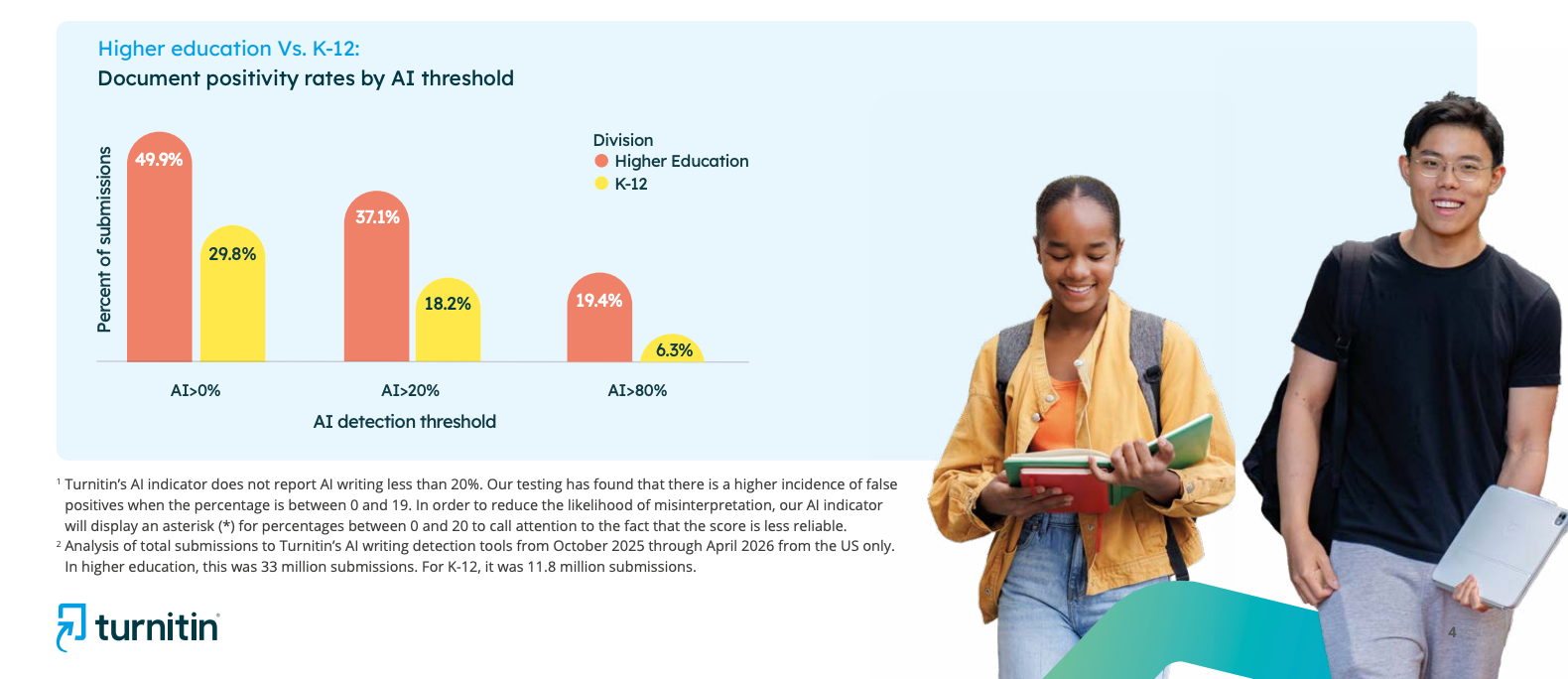
The landscape of academic integrity has undergone a profound transformation in recent years, driven by the rapid proliferation of artificial intelligence tools. As educational institutions worldwide grapple with new challenges surrounding student work authenticity, Turnitin’s Learning Integrity Insights Report provides crucial data-driven insights into emerging trends, student behaviors, and educator strategies. This comprehensive analysis examines the report’s key findings and their implications for the future of education.
The Evolution of Academic Misconduct in the Digital Age
Academic misconduct is hardly a new phenomenon—it has existed since the dawn of formal education. However, the mechanisms and sophistication of cheating have evolved dramatically, particularly with the integration of digital technologies and, more recently, generative AI.
According to Turnitin’s research, the 2024-2025 academic year was anticipated to be pivotal in how educational institutions approach AI integration. The traditional methods of detecting plagiarism are no longer sufficient in an era where students can generate entire essays with a single prompt. Modern academic misconduct now encompasses a range of sophisticated practices including:
- Generative AI misuse: Students using tools like ChatGPT to produce assignments
- Automated text modification: Software designed to rephrase AI-generated content to evade detection
- Contract cheating: The outsourcing of academic work to third parties
- Sophisticated exam tactics: Digital-age methods of gaining unfair advantages during assessments
Key Findings from the Q2 Learning Integrity Insights Report
Turnitin’s Learning Integrity Insights Report, particularly the Q2 edition, reveals several significant trends that educators and administrators must understand:
1. American Students Show Higher AI Usage
One of the most striking findings is that American university students are using AI tools more frequently than their counterparts in other regions. This regional disparity raises important questions about cultural attitudes toward AI assistance, institutional policies, and the availability of AI tools across different educational systems.
2. “Responsible” AI Use is a Spectrum
Perhaps the most nuanced finding is that the concept of “responsible” AI use exists on a wide spectrum. Neither students nor educators have uniformly adopted AI tools—their approaches range from complete resistance to full integration. This variation presents both challenges and opportunities for educational institutions:
- Resistance: Some educators and students view AI as fundamentally incompatible with authentic learning
- Integration: Others embrace AI as a tool that can enhance learning when used appropriately
- Personalization: Many take a middle-ground approach, incorporating AI selectively based on specific learning objectives
3. Educator Adaptation is Critical
The report emphasizes that educators must adapt their teaching methods to encourage critical thinking over reliance on AI. This involves rethinking assessment design, providing clearer guidelines on acceptable AI use, and developing new pedagogical approaches that leverage AI’s benefits while mitigating its risks to academic integrity.
The Role of Advanced Detection Technology
In response to these evolving challenges, Turnitin has developed robust tools to help educators maintain academic integrity. Modern plagiarism detection systems now incorporate sophisticated features including:
AI Writing Detection
Advanced algorithms can now identify patterns characteristic of AI-generated text, helping educators flag work that may not represent authentic student effort. The visibility offered by AI writing statistics enables administrators to understand the extent of AI-generated content in their institutions.
Contract Cheating Identification
As the market for academic outsourcing grows, detection tools have become increasingly sophisticated in identifying work completed by third parties. Turnitin’s iThenticate 2.0 represents a significant advancement in maintaining the integrity of high-stakes content.
Originality Assessment
Beyond simple similarity matching, modern tools provide comprehensive originality assessments that consider multiple factors including writing style analysis, submission patterns, and comparative baselines.
Implications for Educational Institutions
The findings from Turnitin’s report carry significant implications for how institutions should approach academic integrity in the coming years:
1. Policy Development
Institutions must develop clear, comprehensive policies regarding AI use. These policies should:
- Define acceptable and unacceptable uses of AI tools
- Provide guidance for different disciplines and assessment types
- Be regularly updated as technology evolves
- Be communicated clearly to both students and faculty
2. Assessment Redesign
Traditional assessments may no longer be appropriate in their current form. Educators should consider:
- Shifting toward process-based assessments that demonstrate learning over time
- Incorporating oral examinations or vivas
- Designing assessments that require student reflection and personal experience
- Utilizing real-time assessment methods that reduce opportunities for AI assistance
3. Building a Culture of Integrity
Perhaps most importantly, institutions must work to build genuine cultures of academic integrity where students understand the intrinsic value of original work. This involves:
- Early intervention and education about academic integrity
- Creating environments where seeking help is normalized
- Providing adequate support for students struggling with academic demands
- Recognizing and rewarding authentic achievement
Best Practices for Educators
Based on the report’s findings, educators can implement several practical approaches:
- Allow resubmissions: Giving students the opportunity to see their similarity reports and resubmit drafts can be particularly helpful, especially at the first-year level. This approach highlights areas where students might need to improve their writing and citation practices.
- Combine detection tools: Using Turnitin alongside traditional plagiarism checks enhances academic integrity monitoring and provides more comprehensive protection against various forms of misconduct.
- Provide clear guidelines: Ethical AI usage requires clear guidelines and responsible implementation in education.
- Embrace feedback loops: Develop students’ original thinking and writing with more frequent, timely, and actionable feedback loops that also reduce educators’ grading workload.
Looking Ahead: The Path Forward
As we move further into 2025 and beyond, the relationship between AI and education will continue to evolve. The key challenge for educational institutions is finding a balance that preserves the fundamental values of academic integrity while embracing the legitimate benefits that AI can offer to learning.
The Turnitin Learning Integrity Insights Report demonstrates that this is not a binary situation—it’s a spectrum of approaches that must be carefully navigated. Institutions that succeed will be those that:
- Remain adaptable to emerging technologies
- Invest in educator training and support
- Develop thoughtful, nuanced policies
- Focus on fostering genuine understanding rather than simply detecting misconduct
Conclusion
The transformation of academic integrity in the AI era represents one of the most significant challenges facing education today. Turnitin’s Learning Integrity Insights Report provides invaluable data and insights for navigating this complex landscape. By understanding the trends, embracing appropriate technology, and fundamentally rethinking our approach to assessment and integrity, educational institutions can emerge from this transition stronger than before.
The future of academic integrity doesn’t lie in an adversarial relationship with technology, but in thoughtful integration that serves the core mission of education: developing critical thinkers who can navigate an increasingly complex world with integrity and skill.